


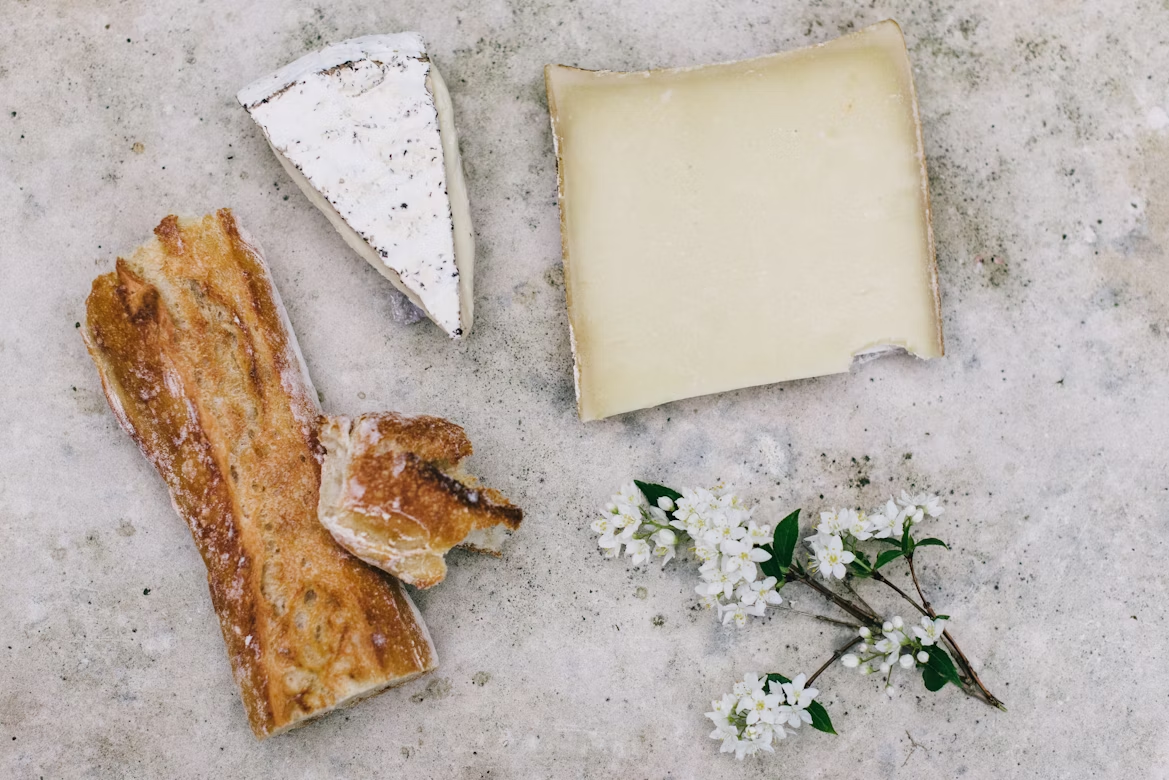
A kaleidoscope of cheese – about greek cheese
When asked what do you associate Greece with? Most people answer without hesitation: olives! Indeed, olive groves are an integral part of the Greek landscape, as is the brilliant olive oil produced from them. When you sit down at a Greek table, the first thing that appears is this liquid gold. A must-have accompaniment to every dish. Greece is one of the largest olive oil producers in the world, not only in terms of quantity but also quality. But this country isn’t just about olive oil. There’s another Greek product consumed in record quantities. Greeks are true cheese lovers! They consume the most cheese per person in the entire European Union—and by a wide margin. That’s an average of 32 kg of cheese per person per year! By comparison, the French, known worldwide for their love of cheese, eat around 26-27 kg of it, while in Poland we eat only 13-15 kg of cheese per person. Of those 32 kg, three-quarters is, of course, feta. The queen of Greek cheeses. An essential ingredient in Greek salads, but also in many dishes served both hot and cold. Of course, feta is the most famous Greek cheese (Warning! Halloumi is a Cypriot cheese! Admittedly, if you ask a Greek if Cyprus is Greek, they’ll probably say yes, but halloumi doesn’t deserve that title). There are many varieties to choose from. Over 60 different types of traditional cheeses are produced throughout Greece, and some sources even mention over 80, if you count regional variations and homemade recipes. These include Graviera – a hard, slightly sweet cheese from Crete; Mizithra – fresh or aged, slightly sweet; Kefalotyri – very salty, hard; Metsovone – a smoked, semi-hard cheese, similar to smoked provolone; Kasseri – a semi-hard, springy, slightly sweet cheese, perfect for grating; and Anthotyro – a light, cottage cheese, perfect for desserts. Virtually every region of Greece, whether mainland or island, produces products typical of its locale. Zakynthos is no exception, boasting a cheese produced exclusively on the island – ladotyri. While there’s a cheese of the same name on the island of Lesbos, it’s a completely different product than the one produced on Zakynthos. The name “ladotyri” (λαδοτύρι) comes from two Greek words: λάδι (ládi) – olive oil, and τυρί (tyrí), meaning cheese. It’s a hard, mature cheese, usually made from sheep’s milk (sometimes with a touch of goat’s milk), which, after initial ripening, is immersed in olive oil, where it can mature for up to several months. Its structure and intensity vary slightly from island to island. The Zakynthos version is more spicy and intense in flavor, matured not only in olive oil but often in clay vessels or wooden barrels, and often has a natural, slightly cracked rind – a sign that it has been matured “the old way.” How is ladotyri made? The milk is pasteurized very lightly, or not at all if made at home. After the curds are set, the cheese is formed into discs. The cheeses are salted and left to pre-ripen for several weeks. They are then immersed in olive oil, which imparts its characteristic slightly bitter, slightly spicy flavor. In ancient times, when homes did not have refrigerators, olive oil was used to preserve food, so the cheese can “age” in this brine for up to 12 months.
Ladotyri is often served diced as an appetizer, for example, with the local Verdea wine. It can be served grilled or pan-fried, in casseroles with pasta or meat, a sort of Greek “Parmesan.” Greeks also love eating sweet cheeses with honey, grape jam, or tomato marmalade. This dessert version of cheese was invented in Greece in ancient times, and you can still enjoy this spicy-sweet explosion of flavors today.
Where to buy ladotyri?
• Local markets and bazaars (e.g., in Zakynthos Town),
• Regional produce shops – many offer tastings,
• Directly from producers or on farms, especially in the central part of the island (e.g., around Exo Chora, Agios Leon).


